
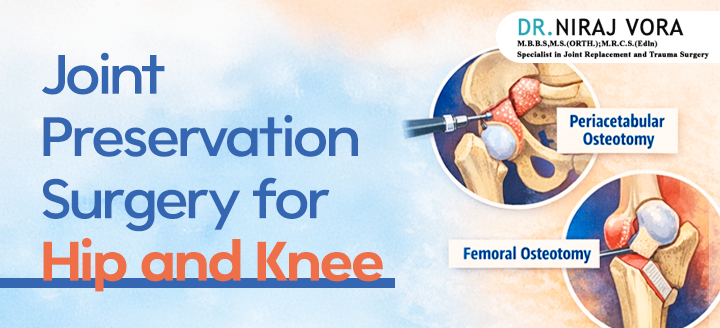
Not every case of joint pain needs replacement. That statement is more relevant today than ever before. Many people dealing with hip or knee pain assume surgery always leads to implants. However, with early detection [and the right approach], preserving the joint is not only possible but also effective. Joint preservation surgery offers a way to treat the problem at its source while keeping the natural joint structure intact.
What Joint Preservation Actually Means
Preservation surgery is not a single method. It is a category of procedures. The goal is to keep the joint structure in place. Instead of replacing the joint, the surgeon restores damaged areas. This includes repairing soft tissue, reshaping bones or improving joint movement.
The advantage of joint preservation is that it allows people to continue using their natural joint. Patients who opt for this route often enjoy a longer period of mobility using their own joint. It is especially helpful for younger adults or people in active jobs who wish to delay or avoid prosthetics for as long as possible.
Hip Joint Preservation Surgery: Who Can Benefit
Conditions like femoroacetabular impingement, labral tears or early cartilage wear are common triggers of hip pain in younger adults. These issues do not always need a replacement. In hip joint preservation surgery, doctors address the problem at its source. That may include reshaping abnormal bone, repairing torn tissues or correcting the joint’s alignment.
Many people experience stiffness in the hip while sitting, turning or lifting the leg. When left untreated, these conditions can progress and cause arthritis. Preservation surgery reduces that risk. With proper recovery and lifestyle changes, patients often regain movement and return to regular activity.
Knee Joint Preservation Surgery: Treatment Beyond Implants
Cartilage damage in the knee builds up gradually. Early signs like swelling, clicking or joint tightness are often ignored. But when caught early, knee joint preservation surgery can make a major difference. These procedures include meniscus repair, ligament reconstruction and techniques that help new cartilage form.
Some people may need bone realignment if uneven pressure is causing pain. In such cases, a procedure called osteotomy is used. It shifts weight away from the damaged part of the joint. This approach is helpful in keeping the knee stable and mobile for years without requiring replacement.
When to Choose Preservation Over Replacement
Choosing between preservation and replacement depends on the stage of joint damage. People with mild to moderate wear often respond well to preservation. Those with advanced arthritis may still need joint replacement. An experienced orthopaedic surgeon can guide you after reviewing scans, symptoms and movement limitations.
Some people prefer to speak with a joint preservation specialist in India when dealing with long-standing pain. Experts like Dr Niraj Vora are often consulted when patients want to explore treatment options that go beyond implants.
Conclusion: A Way to Keep Your Joint Longer
Finding the right hip and knee pain treatment without replacement begins with early evaluation. If movement feels restricted or painful, waiting too long can make the problem worse. Preservation surgery does not suit every condition. But for many people, it offers a chance to move freely again using the joint they were born with. That alone makes it worth exploring.